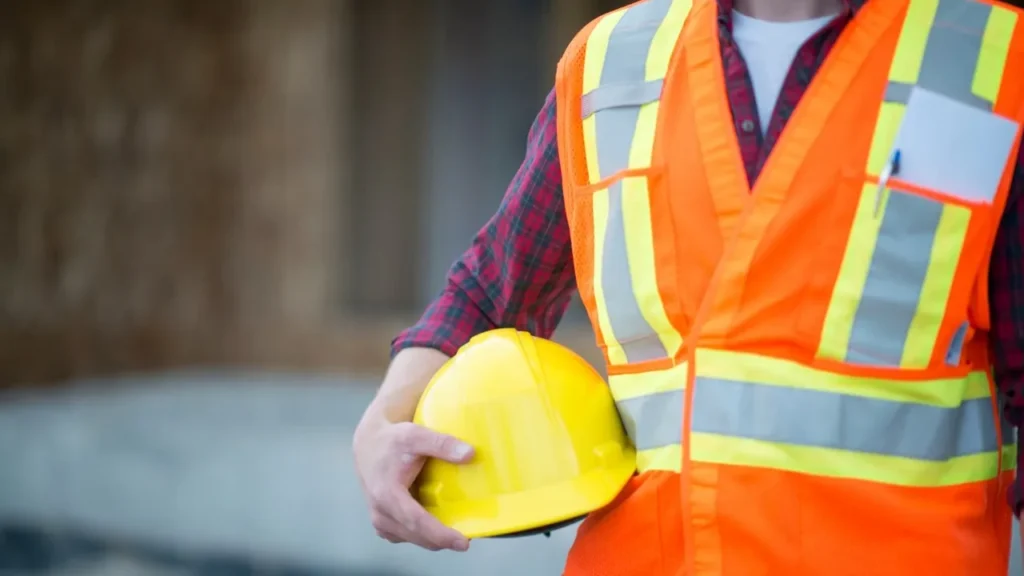
Safety Audit Services
Our consultants come to your site, assess your operations against the applicable standards, and hand you a written plan you can act on.
What a Health and Safety Audit Covers
A health and safety audit is a structured look at your workplace by someone who assesses these conditions for a living. Our experts come on site to identify potential hazards and establish plans to mitigate and control those risks, whether the setting is a manufacturing facility, a construction site or a municipality.
The goal is to reduce hazards, maintain a safe and healthy workplace for employees and support a proactive safety culture. You end up knowing what is there, which standards apply to it, and what to do first.
Assessed in person
Our consultants come on site and look at the actual work: the equipment, the guarding, the entry points and the way your crews move through the space. Examinetics is not an online or self-serve service. A hazard that only shows up during a shift is a hazard you find by being there.
Written findings
For all audits, we provide a detailed written report of findings with pictures, reference to all applicable standards and recommendations for corrective actions. Nobody has to translate it or reconstruct what the consultant meant. The people doing the work get a document that shows the condition and names the fix.
Scoped to your needs
An audit can look at your whole operation or at one specific exposure such as machine guarding, fall protection or confined space entry. A full risk assessment can also identify areas that may reduce your workers’ compensation insurance costs and work compensation claims. You choose the depth.
What We Audit
Our audits assess the conditions in front of us against the standards that actually apply to your operation.
Managing federal, state and industry regulations is a challenge for any employer, and a health and safety audit is the practical way to find out where you stand. Our consultants are well-versed in assessing overall safety risk, and we help you establish policies and procedures along with roles and responsibilities. That work leads to continuous recognition and control of job hazards rather than a one-time snapshot.
An audit often surfaces obligations that require testing rather than a written fix. Noise exposure at or above 85 decibels averaged over eight working hours brings a hearing conservation program into play, and any employee wearing a tight-fitting respirator needs a medical evaluation and fit testing. Examinetics delivers those services on site, so the finding and the remedy stay with one company.
- OSHA gap analysis
- Machine guarding
- Lockout tagout practices and written procedures
- Fall protection
- Confined space entry
- Industrial hygiene exposures
- Full EHS risk assessment across the operation

How It Works: The Audit Process
We start by agreeing on what the audit needs to cover. That might be your whole operation or one specific exposure such as machine guarding, fall protection or confined space entry. From there we schedule the visit around your production schedule so the work is not interrupted.
A consultant comes to your site and assesses the actual work: the equipment, the guarding, the entry points and the way your crews move through the space. We compare what we see against the federal, state and industry standards that apply to your operation.
You receive a detailed written report of findings with pictures, references to the applicable standards and recommendations for corrective actions. Where the audit surfaces obligations that require testing, such as hearing conservation or respirator fit testing, Examinetics can deliver those services on site.
Audit findings belong with the rest of your safety documentation. For clients on an ongoing program, safety forms, training and recordkeeping are managed through our EHS Portal, so the report is filed where the rest of the program lives.
A gap analysis compares what your safety program currently covers against the standards that apply to your operation, and documents the difference. It is the right starting point when you have inherited a program, when nobody is sure what is in place, or when you want a baseline before committing to a longer effort. Findings arrive in the same written report format, with photographs and standard references.

We assess guarding on your equipment and identify where points of operation and moving parts are exposed to the people working around them. The audit documents each condition with photographs and references the applicable standard, then recommends the corrective action. This is one of the areas where being on the floor during production matters, because guarding that looks adequate at rest can tell a different story in use.
Some findings are exposures rather than physical hazards. Our safety and industrial hygiene consultants help you recognize, evaluate and control occupational exposures including noise, air contaminants, physical, chemical and biological hazards, and ergonomic risk factors. They employ testing measures to evaluate those exposures properly and assist in developing the controls necessary to reduce or eliminate them.

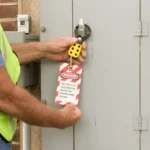
Lockout tagout work covers both practice and paperwork. We assess how energy control is being performed on your equipment and review the written procedures behind it, then document what needs to change. Where procedures are missing or out of date, we can develop the written procedures for your equipment so the program your employees are trained on matches the machines actually in the building.
A fall protection audit examines where people work at height, what protects them and whether the arrangements hold up in practice. We document exposures with photographs, reference the applicable standards and recommend corrective actions in the written report. The assessment covers the conditions we observe on site, including access points and work areas that may not appear in the formal program.

Confined space work is assessed on site because the spaces themselves determine the answer. We identify the spaces in your operation, look at how entry is currently managed and document what we find against the applicable standards. Recommendations for corrective action come back in the written report along with photographs, so the people responsible for entry can see the specific space being described.

When an Audit Is the Right Call
An audit suits a specific moment rather than a specific company size.
Safety became your responsibility and you need a baseline
HR professionals, plant managers and office administrators are often the ones put in charge of safety without direct experience in it. An audit gives you an independent read on what is actually in your building and what to address first, so your decisions are not guesses.
Your safety manager needs a second set of eyes
Safety managers with limited resources get stretched thin, and familiarity with a site can quietly become blindness to it. An outside consultant assesses the same floor without the assumptions, then documents it in a form you can take to leadership.
You have one exposure you already know about
Sometimes the question is narrow: the guarding on a new line, the fall exposures on a mezzanine, the confined spaces nobody has inventoried. We can scope an audit to that single area instead of the whole operation.

Resources and Information