
Hearing Conservation Program Requirements
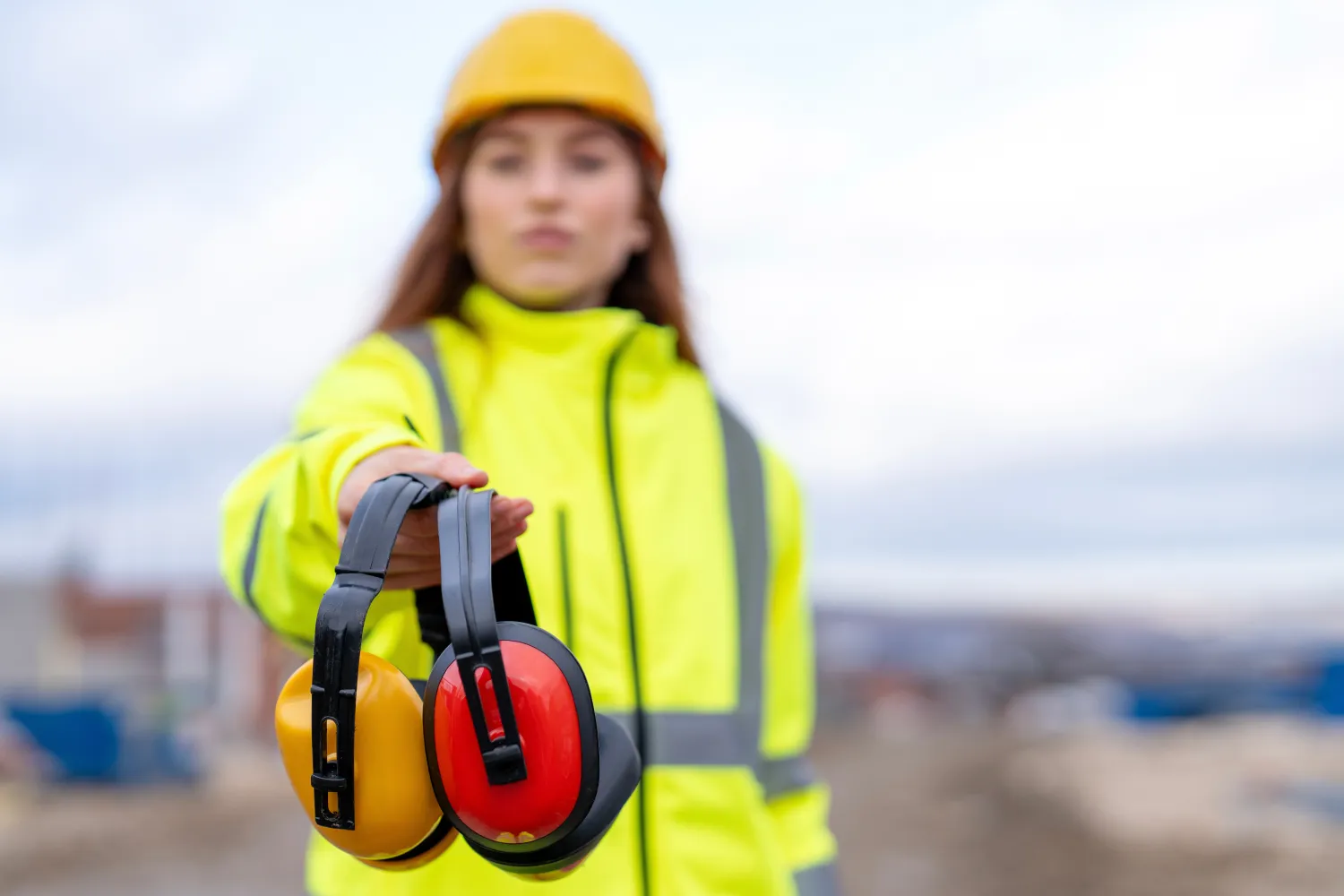
When workplace noise reaches OSHA’s action level, employers are required to implement a hearing conservation program. Examinetics helps your company build a compliant program that fits your operational needs.
Every year, about 27 million U.S. workers are exposed to hazardous noise at work. For a safety manager, that number becomes a concrete obligation once an employee’s noise exposure reaches an 8-hour time-weighted average of 85 decibels. At this point, OSHA requires a full hearing conservation program, not just a box of earplugs.
Hearing Health: Noise Exposure Level and Hearing Conservation Requirements
OSHA’s Standard on Occupational Noise Exposure (29 CFR 1910.95) establishes safety protocols that protect workers from noise-induced hearing loss in the workplace.
An employee’s enrollment in a company hearing conservation program is based on noise exposure, not job title. This means that two people in the same role can carry different obligations if their noise levels differ.
Here are the requirements for different levels of noise exposure:
| Noise Exposure Level | OSHA Hearing Conservation Requirement |
|---|---|
| Below 85 dBA | No hearing conservation program under OSHA 1910.95. Monitoring is a good practice to confirm exposures stay below the action level. |
| 85 to 89 dBA (at or above the action level) | Full program required:
Wearing hearing protection is required only if the employee has experienced a Standard Threshold Shift (STS) or has not yet received a baseline audiogram. |
| 90 dBA and above (at or above the permissible exposure limit) | Everything required at the action level applies; hearing protection use is mandatory. Employers must implement feasible engineering and administrative controls to reduce exposure. |
| 140 dB (peak, impulsive or impact noise) | Exposure must not exceed 140 dB peak sound pressure level |
Making protectors available and requiring their use are two different obligations. In the 85 to 89 dBA band, employers must offer workers a choice of hearing protectors at no cost, but wearing them is generally up to the employee.
Use becomes mandatory in three cases:
- The worker has not yet had a baseline audiogram
- The worker has experienced a Standard Threshold Shift
- Exposure reaches the 90 dBA permissible exposure limit
The Core Elements Every Program Must Include
An effective hearing conservation program requires more than just hearing protection. According to OSHA’s Occupational Noise Exposure standard (29 CFR 1910.95), safety managers must build a program that includes:
- Noise monitoring: Measure exposures to identify who meets or exceeds the 85 dBA action level, and use the results to guide hearing protector selection. (1910.95(d))
- Audiometric testing: Provide baseline and annual hearing tests at no cost to covered workers, then compare them to catch changes early. (1910.95(g) and (h))
- Hearing protectors: Offer a choice of suitable protectors, and ensure they are worn where the standard requires it. (1910.95(i) and (j))
- Training: Train enrolled workers each year on noise, proper protector use and care, and the purpose of testing. (1910.95(l))
- Recordkeeping: Keep noise measurement and audiometric records for the required periods (1910.95(m))
A compliant OSHA hearing conservation program depends on these parts functioning together. Examinetics helps employers cover all five under one provider, using the same protocols at every location.

Noise Monitoring and Exposure Assessment
With employees experiencing different noise exposure levels, a safety manager needs a way to determine which workers should be enrolled in the hearing conservation program.
Noise monitoring and employee exposure measurement identify which employees meet or exceed the action level and what hearing conservation program requirements apply to them.
Monitoring is an ongoing process. Many employers resurvey whenever there is a change in production, processes, equipment, or controls that could push more workers over the threshold or render current protections inadequate.
At Examinetics, our workplace noise surveys are conducted by certified occupational audiologists and industrial hygienists. With our help, you get a clear, documented picture of who is exposed and who needs to be in the program.
Audiometric Testing Requirements
Hearing testing is the backbone of a compliant hearing conservation program. It measures whether your controls and noise protectors are actually working. Testing must be available at no cost to employees at or above the action level.
Testing starts with a baseline audiogram. This initial test becomes the reference point that every subsequent exam will be measured against.

Baseline audiograms must be performed within six months of a worker’s first exposure to noise at or above 85 dBA, and then tested annually. If you use a mobile test van, you have up to a year to perform a baseline audiogram, as long as the worker wears hearing protection in the meantime.
The annual testing requirement is per employee, not per facility, so a single organization may need to schedule several audiometric exams per year. Examinetics delivers hearing testing in three ways, so every employee in your hearing conservation program can be tested on time no matter where or when they work.

Hearing Protection and Employee Training
After enrolling the correct employees in your hearing conservation program and performing a baseline audiometric exam, your program needs to provide hearing protection and employee training.
Hearing Protection Devices
Hearing protectors must be made available to workers in your program at no cost to them, and replaced as needed. They must be able to choose from a variety of suitable protectors, which can include foam and reusable earplugs, canal caps, and earmuffs.
Personal protective equipment must be comfortable enough to wear consistently and appropriate for the noise environment in which they operate. Hearing protectors that work on one line may not be enough on a louder line.
Employee Training
Training is required every year for every worker enrolled in your hearing conservation program. Each annual session must cover:
- How noise damages hearing
- How to select, use, and care for hearing protectors
- The purpose and procedures of audiometric testing
Examinetics offers safety training with standardized training materials and a set schedule to keep the message consistent and make it easier to prove every worker was trained.
Recordkeeping and Keeping the Program Audit-Ready
A good program needs good records to back it up. In an inspection or a claim, records are proof that each step was completed as it should be. OSHA sets specific retention periods:
- Noise exposure measurement records must be kept for at least two years
- Each worker’s audiometric test records must be kept for as long as that worker is employed
A record of audiograms is how work-related hearing loss gets on your OSHA 300 log. A loss becomes recordable only when two conditions are met in the same ear:
- The worker has a work-related Standard Threshold Shift
- That ear’s total hearing level reaches 25 dB or more above audiometric zero (averaged at 2,000 Hz, 3,000 Hz, and 4,000 Hz)
Correctly capturing and recording these cases is part of staying compliant, and it depends on having baseline and annual results for comparison.
When audiograms, noise surveys, and training records are stored in different systems and formats, an audit becomes a scramble. Examinetics helps your company keep records consistent and in one place, under a single set of protocols, so you can be audit-ready across all locations.
Delivery Methods That Fit Your Operations
Whether you need testing at a remote location or a large production facility, Examinetics offers three delivery methods to support your hearing conservation program:
Onsite Mobile Unit:
Conduct hearing testing by using an Examinetics mobile unit. A technician comes to your site and administers hearing testing with a custom van, truck, or trailer.
Clinic:
Send your employees to a nearby clinic in the Examinetics network that offers hearing testing and other occupational tests and screenings. Examinetics handles scheduling directly and provides centralized data to streamline occupational health program management.
On-demand Testing:
Run audiometric testing year-round on your own schedule, all on-site.
With all three options available under one provider, you can match testing to how your workforce actually operates and keep hearing testing on schedule everywhere.
Build a Hearing Conservation Program with Examinetics
Occupational noise exposure can cause permanent hearing loss. A compliant hearing conservation program keeps multiple moving parts in sync and is a core part of your wider occupational safety efforts.
Examinetics helps organizations run a consistent program across shifts, sites, and a diverse workforce.
We work with safety teams nationwide to deliver occupational hearing testing that covers every employee, on schedule, no matter when or where they work.
Standardized protocols and centralized records keep your audiometric history consistent and audit-ready across locations.
See how Examinetics helps you meet the hearing conservation program requirements set by OSHA.
