
Respirator Fit Test Requirements | What OSHA Requires
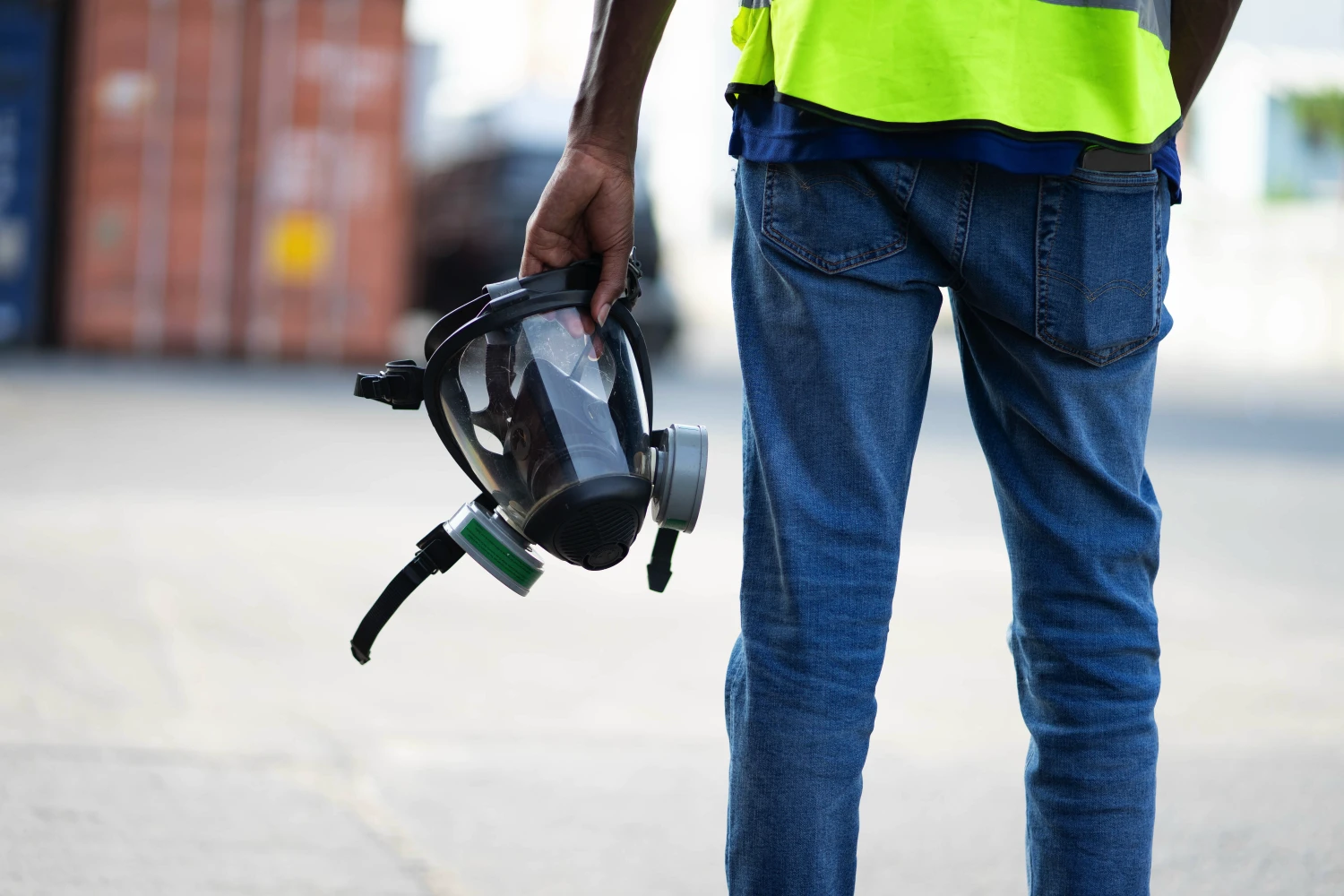
Simply investing in respirators for your employees isn’t enough to remain OSHA-compliant. Without a proper fit, a respirator offers little real protection, and there’s no way to know if it’s failing until it’s too late. A loose seal lets contaminated air leak in around the edges, even if the mask itself is rated for the hazard.
That’s why OSHA requires fit testing. With testing, safety managers can feel confident that a respirator is actually working. Fit testing is the only way to confirm that a respirator is sealing properly before your employees enter a hazardous atmosphere.
This guide walks through respirator fit test requirements, different testing methods, and common mistakes that affect compliance. If you’re ready to get your team tested, Examinetics delivers respirator fit testing onsite, at clinics, or on demand, wherever it works best for your operation.
Who Is Required to Get a Respirator Fit Test?
Not every worker who wears a respirator needs a fit test. A fit test is required for any employee wearing a tight-fitting facepiece, including:
- N95 masks
- Half-face respirators
- Full-face respirators
- Powered air purifying respirators (PAPRs) with a tight-fitting facepiece
- Self-contained breathing apparatus (SCBA)
Loose-fitting hoods and helmets used with PAPRs are typically exempt, since they don’t rely on a tight seal against the face. If your employees aren’t required to wear a respirator but choose to anyway, different rules apply. See our guide to voluntary respirator use to learn what’s expected of you in that case.
Examinetics provides convenient fit testing for all of these respirator types, both onsite and at clinics.
When Is a Fit Test Required?
A fit test isn’t a one-time box to check. OSHA requires fit testing at specific points:
- Before an employee uses a respirator for the first time
- Whenever a different respirator facepiece is used (a different size, style, model, or make)
- If a worker’s face has changed (ie: weight loss/gain, dental work, scarring, etc.)
- At least once every year after an initial fit test
Some companies test more often based on the hazards their employees face or on what their respiratory protection program calls for. Examinetics helps companies stay ahead of these deadlines with annual fit testing scheduled around your shifts and location, so retesting never gets missed.
Qualitative vs. Quantitative Fit Testing: Which Method Applies?
OSHA accepts two types of respirator fit testing methods: qualitative and quantitative. These tests each measure whether a respirator fits over an employee’s nose and mouth to form a tight seal that protects against hazardous airborne particles.
Qualitative Fit Test
A qualitative fit test relies on a user’s sense of taste to detect air leakage from the respirator. It is a pass/fail method used on half-masks. Examinetics uses Saccharin (a sweet-tasting chemical) or Bitrex (a harmless, bitter-tasting chemical) to see if an employee can taste the chemical while wearing their respirator. If they can, the respirator fails. Both methods are accepted by OSHA under 29 CFR 1910.134.
Quantitative Fit Test
A quantitative fit test is performed by a machine that measures the precise amount of leakage into any tight-fitting facepiece. OSHA accepts three quantitative fit test methods, and Examinetics offers all three:
- General aerosol: uses a controlled aerosol generated inside a test chamber to measure how much leaks into the respirator
- Ambient aerosol: uses naturally occurring particles already in the air rather than generated aerosol, measuring leakage the same way
- Controlled negative pressure (CNP): briefly seals the respirator to the face and measures how quickly pressure changes to indicate whether air is leaking in
Examinetics offers both qualitative and quantitative fit testing, delivered onsite or at a nearby clinic, so you can choose the method that fits your respirators and your schedule.
Common Mistakes That Affect Compliance
Even companies with a fit testing program in place can fall out of compliance without realizing it.
Common respirator fit test mistakes that companies make include:
- Skipping or rushing the medical evaluation before fit testing
- Not retesting after an employee’s face changes from weight loss/gain, dental work, or facial scarring
- Allowing facial hair that crosses the sealing surface and prevents a proper seal
- Missing annual fit test requirements due to fear of productivity loss
Most of these mistakes stem from the same root cause: compliance around operations is hard, so it gets deprioritized. Examinetics helps you avoid these gaps with onsite medical clearance and fit testing, so compliance doesn’t come at the cost of productivity.

How Examinetics Makes Fit Testing Simple
Staying compliant with OSHA’s respirator fit test requirements doesn’t have to disrupt your operations. Examinetics delivers both qualitative and quantitative fit testing onsite, at a nearby clinic, or on demand, so you can choose the best method for your workforce. Our fleet of more than 140 mobile units and network of 6,500 occupational clinics provide a convenient option no matter where your teams are located.
Once an employee passes their fit test, our data management platform records the make, model, and size of their properly fitted respirator and stores it, keeping data organized and ready for an audit.
If you’re ready to schedule fit testing for your team, request a quote or contact Examinetics to get started.
Respirator Fit Test Requirements FAQs
These are two separate requirements that are listed under OSHA 1910.134.
A fit test is a formal protocol that qualitatively or quantitatively evaluates the fit of a respirator on an employee. It must be performed at least once a year. A user seal check is a quick self-check that the worker performs every time they put on their respirator to determine whether it is properly seated on the face.
A user seal check does not replace the annual respirator fit test requirement.
No. OSHA requires a new fit test any time the make, model, size, or style of a respirator changes. When changing respirator supplies or introducing a new model, employees must be retested before using that device, even if it is the same size.
Medical clearance must happen before a respirator fit test. Skipping this step violates OSHA 1910.134(e)(1), which requires that employees be medically evaluated and cleared before they are fit-tested or required to wear a respirator on the job.
Examinetics offers online respirator medical clearance evaluations that employees can complete before their fit-testing appointment, helping you stay compliant without juggling multiple vendors.
Testing time varies depending on the method used and how prepared employees are when they arrive. Typically, a qualitative fit test is faster than a quantitative fit test, but employees who need to shave before testing or who arrive without medical clearance can add significant time to the process.
See our guide to prepping for respirator fit testing day to better prepare your employees and minimize testing times.
A failed fit test means that the respirator being tested does not form an adequate face seal on that employee. Most programs test more than one respirator option to find an acceptable fit. Employees should not be sent into a hazardous environment wearing a respirator if it has not passed a fit test for that employee.
Yes, if an employee is required to wear a respirator at any point in their job, they must be fit-tested before using it and then retested annually.
However, if a worker is not required to wear a respirator but chooses to wear one anyway, fit testing is not mandated. In cases of voluntary respirator use, employers still have obligations to follow. At a minimum, OSHA requires employers to provide voluntary users with Appendix D of 1910.134. It outlines safe use practices to ensure that wearing the respirator itself won’t create a health hazard. For a full breakdown of these standards, see our guide to voluntary respirator use.
Yes, while OSHA 29 CFR 1910.134 is the most widely referenced standard, some industries have their own specific requirements.
The mining industry is governed by MSHA, which has specific respiratory protection requirements. For metal and nonmetal mines, MSHA 30 CFR § 60.14 mandates a written respiratory protection program that includes fit testing. For coal mines, MSHA 30 CFR § 72.710T also requires respirator fit testing.
Examinetics provides respirator fit testing services that support compliance with OSHA, MSHA, FRA, DOT, and other regulatory agencies. If you’re unsure which standards apply to your workforce, contact our team to discuss your specific situation.