
OSHA Standards for Indoor Air Quality: What Employers Need to Know
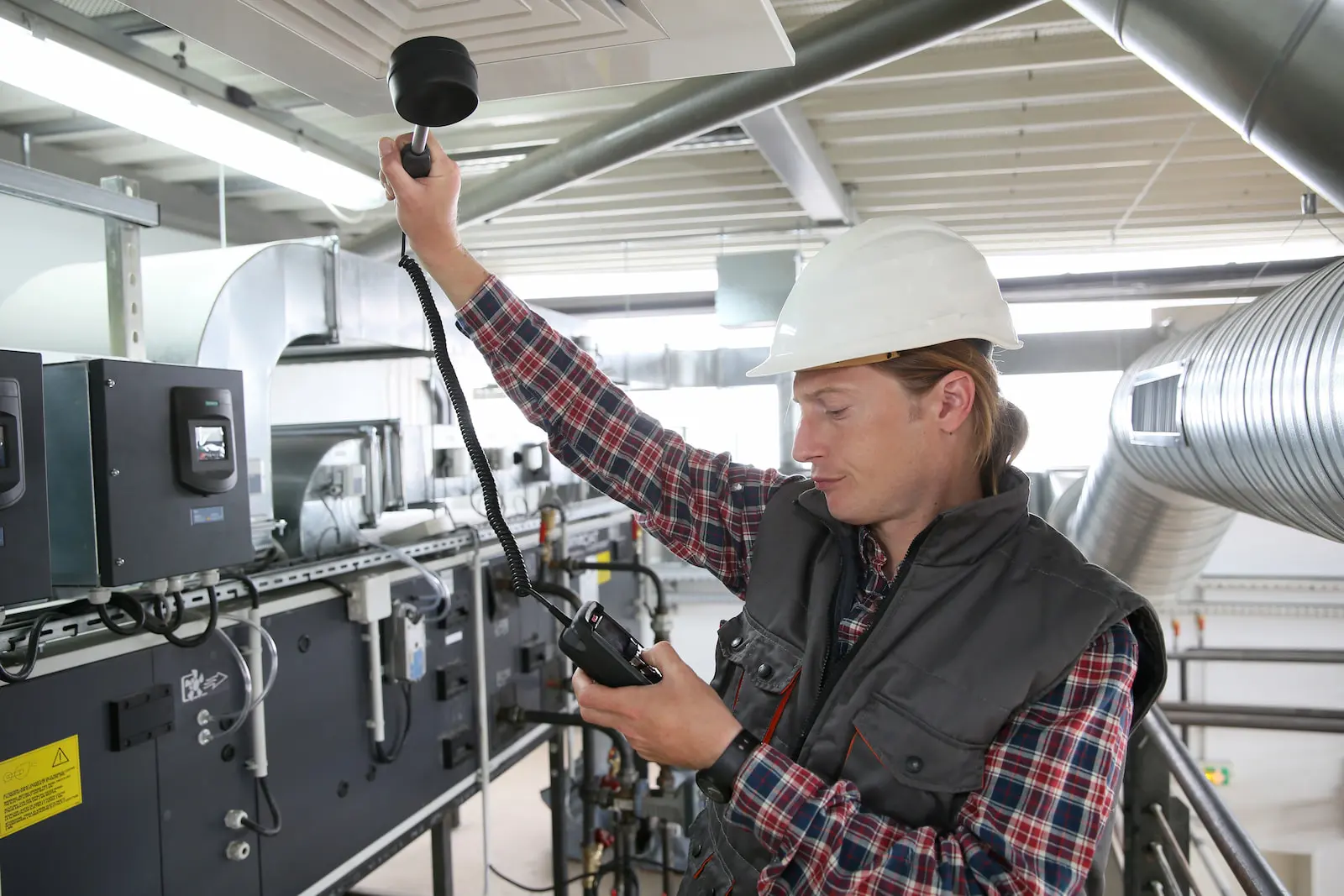
Monitoring the indoor air quality of your workspace is important for keeping your workforce healthy and safe. To protect employees from work-related health risks posed by air contaminants, OSHA has established standards and guidelines for indoor air quality.
OSHA has defined hundreds of air contaminants, which can make it challenging to stay compliant. For companies running multiple facilities with different shifts and air-quality risks, understanding OSHA standards for indoor air quality is critical for compliance.
At Examinetics, we have created this guide to break down what OSHA requires, the common signs and problems to watch for, and how employers can monitor and improve air quality in their workplace.
Ready to get ahead of air quality issues at your workplace? Request a quote today.
What the OSHA Standards for Indoor Air Quality Cover
Indoor air quality (IAQ) refers to how inside air can affect a person’s health, comfort, and ability to work.
At Examinetics, we help you stay compliant and monitor air contaminants that OSHA cares about, including:
OSHA’s air quality framework isn’t just one single rule; it’s a system in which different standards work together. These standards are governed by three categories: permissible exposure limits (PELs), ventilation-related standards, and the general duty clause.
Permissible Exposure Limits (PELs)
Common OSHA standards for indoor air quality are permissible exposure limits (PELs). Typically measured as an eight-hour time-weighted average (TWA), permissible exposure limits are the maximum amount of a specific contaminant to which a worker can be exposed.
These PELs are set by OSHA under 29 CFR 1910.1000 and cover roughly 500 substances.
Ventilation-Related Standards
Ventilation-related standards are how employers keep their workspaces beneath PELs.
OSHA’s main ventilation rule, 29 CFR 1910.94, requires employers to have ventilation systems designed to move enough air through a workspace to dilute or remove contaminants before they build up to unsafe levels.
Proper airflow is one of the main tools employers have for staying compliant with PELs, and these systems must be tested regularly.
General Duty Clause
Not every indoor air-quality contaminant is clearly outlined by OSHA. The general duty clause listed in Section 5(a)(1) of the OSHA Act is an umbrella standard.
It maintains that employers must keep the workplace free of recognized hazards that are likely to cause death or serious harm, even if not specifically regulated by OSHA air quality standards.
Guidelines for Good Indoor Air Quality
Any OSHA enforceable standards for indoor air quality center on health-based industrial exposure limits rather than general employee comfort.
So, while workspaces may legally meet OSHA regulations, employees may still experience unpleasant indoor air quality at work.
Uncomfortable indoor air quality can include:
- Too warm/too cold temperature
- High humidity
- Stale air
- Dust, debris, or indoor air pollution
OSHA’s guidance points to three basics for proper indoor air quality: comfortable temperature and humidity, an adequate supply of fresh air, and control of pollutants from inside and outside the building.
Discomfort is often the earliest sign of an underlying air quality problem. Don’t wait for a complaint to turn into a compliance issue.
Common Signs and Causes of Indoor Air Quality Problems
Understanding the signs and causes of poor indoor air quality helps employers catch issues before they become compliance risks.
OSHA explains that early signs of IAQ problems include:
- Unpleasant or musty odors
- Stuffy workspace
- Uncomfortable temperatures
- Workers complaining of physical ailments at work, such as headaches, fatigue, or worsening asthma
Recognizing these signs early is only half the picture. Knowing what typically causes them helps employers address the problem at its source rather than just its symptoms.
According to OSHA, the most common causes of IAQ problems are:
- Poor ventilation that leads to a lack of fresh outdoor air or contaminated air entering the building
- Ventilation, heating, or air conditioning systems that need maintenance
- Dampness or moisture from leaks, humidity, or flooding
- Construction or remodeling in the building that creates dust and debris
- Contamination coming from both indoor and outdoor sources
Most poor air quality problems come down to airflow, moisture, or maintenance. These issues are often preventable with industrial hygiene monitoring.
At Examinetics, we help you meet the air monitoring requirements of OSHA and other regulatory agencies. Request a quote or call to learn how we can help you stay compliant and keep your employees safe.
Improve Indoor Air Quality with Examinetics
Staying ahead of indoor air quality problems starts with knowing what’s actually in the air. At Examinetics, our industrial hygiene consultants work with employers to identify hazardous exposures in your workplace.
Examinetics builds a complete industrial hygiene program around your specific workplace, including:
- Predicting and identifying hazardous exposures
- Deploying testing measures to determine actual exposure levels
- Putting controls in place to reduce or eliminate harmful exposures

Our data-first approach helps employers know which specific contaminants are present, how they compare to PELs, how to address problems, and defend against a general duty clause issue.
If your workplace is dealing with air quality concerns, Examinestic can help identify the source and outline the next steps. Reach out to our industrial hygiene consultants today to monitor and improve air quality in your workplace.
FAQs
OSHA standards for indoor air quality rely on permissible exposure limits (PELs) for specific substances, ventilation-related standards, and the general duty clause to address workplace air quality problems.
Examinetics helps employers stay compliant by monitoring common OSHA-specified air contaminants and implementing an industrial hygiene program.
Permissible exposure limits, or PELs, are the maximum amount of a specific substance a worker can be exposed to during an eight-hour shift. If an employee’s exposure to a hazard exceeds OSHA standards, employers are required to implement engineering controls or provide protective equipment.
The general duty clause is OSHA’s requirement for employers to keep the workplace free of recognized hazards. It is a broader catch-all to cover any contaminants that put workers at risk, even when no specific OSHA standard covers that hazard.
Regular monitoring helps employers catch problems early, remain compliant, and keep their workforce safe. With Examinetics, our industrial hygiene consultants capture air samples, identify substance concentrations, and report findings along with suggested air quality improvements.
OSHA regulates roughly 500 air contaminants under 29 CFR 1910.1000, including dust, fumes, gases, and chemical vapors commonly found in industrial settings. Each contaminant has its own permissible exposure limit (PEL), which sets the maximum amount a worker can be exposed to over an eight-hour shift.
Examinetics can help you stay compliant and monitor for air contaminants regulated by OSHA.